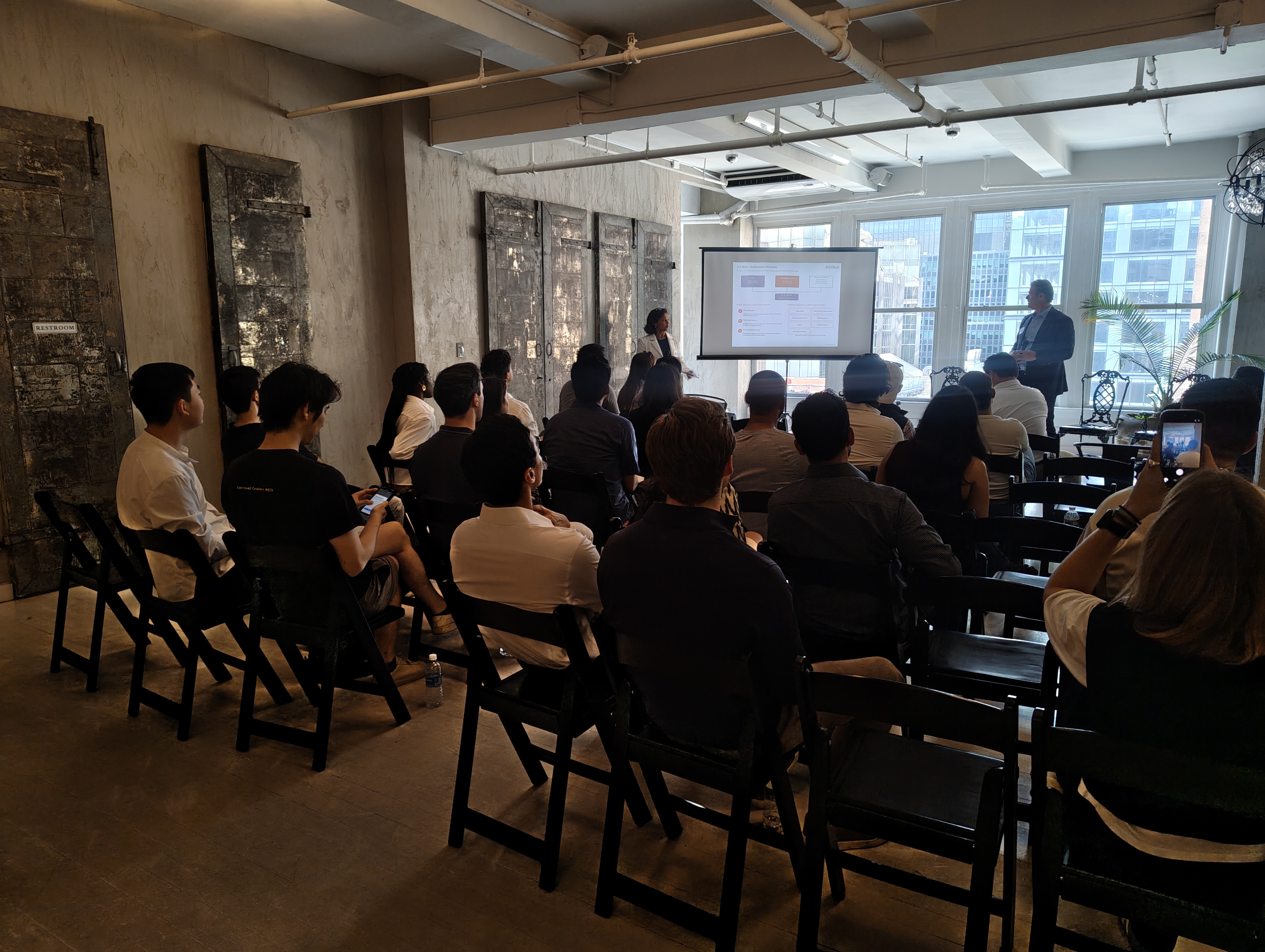
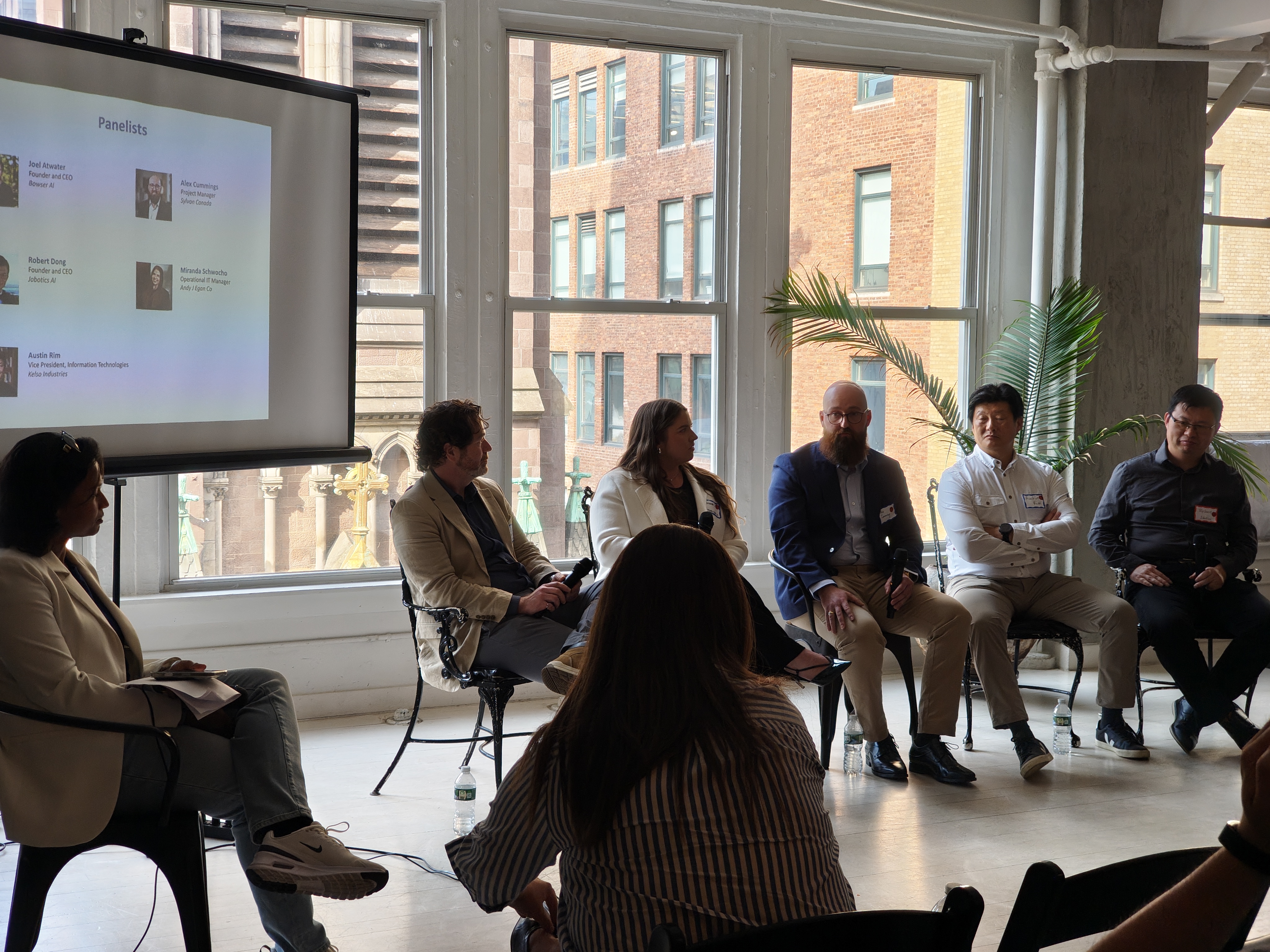
Great week at NY Tech Week. We were honored to host Construction: AI Foresight Over Firefighting in partnership with Bowser AI — a room full of GCs, subs, and investors gathered to talk honestly about where AI is actually moving the needle in construction operations, and where it's still just noise.
The event brought together founders, operators, and contractors for a moderated panel and open discussion — no sales pitches, just real conversations about workflows, workforce, and what comes next.
Hosted by


The Panel
Moderated by Anita Venkiteswaran, the discussion featured founders and operators who have been inside construction long enough to separate what's real from what's hype.
(backed by E3)
(backed by E3)
Ford Oakville automotive retool
Kelso Industries
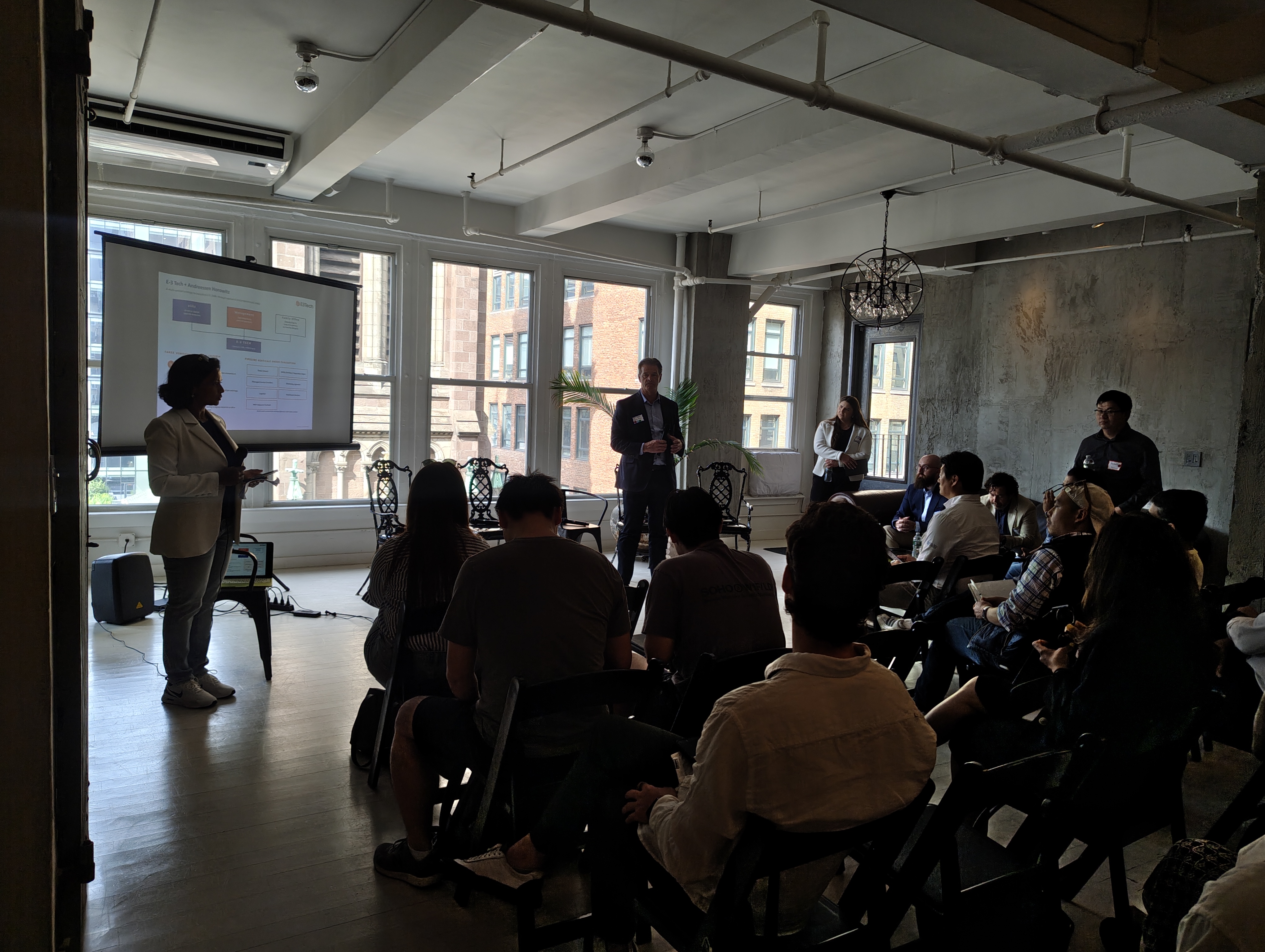
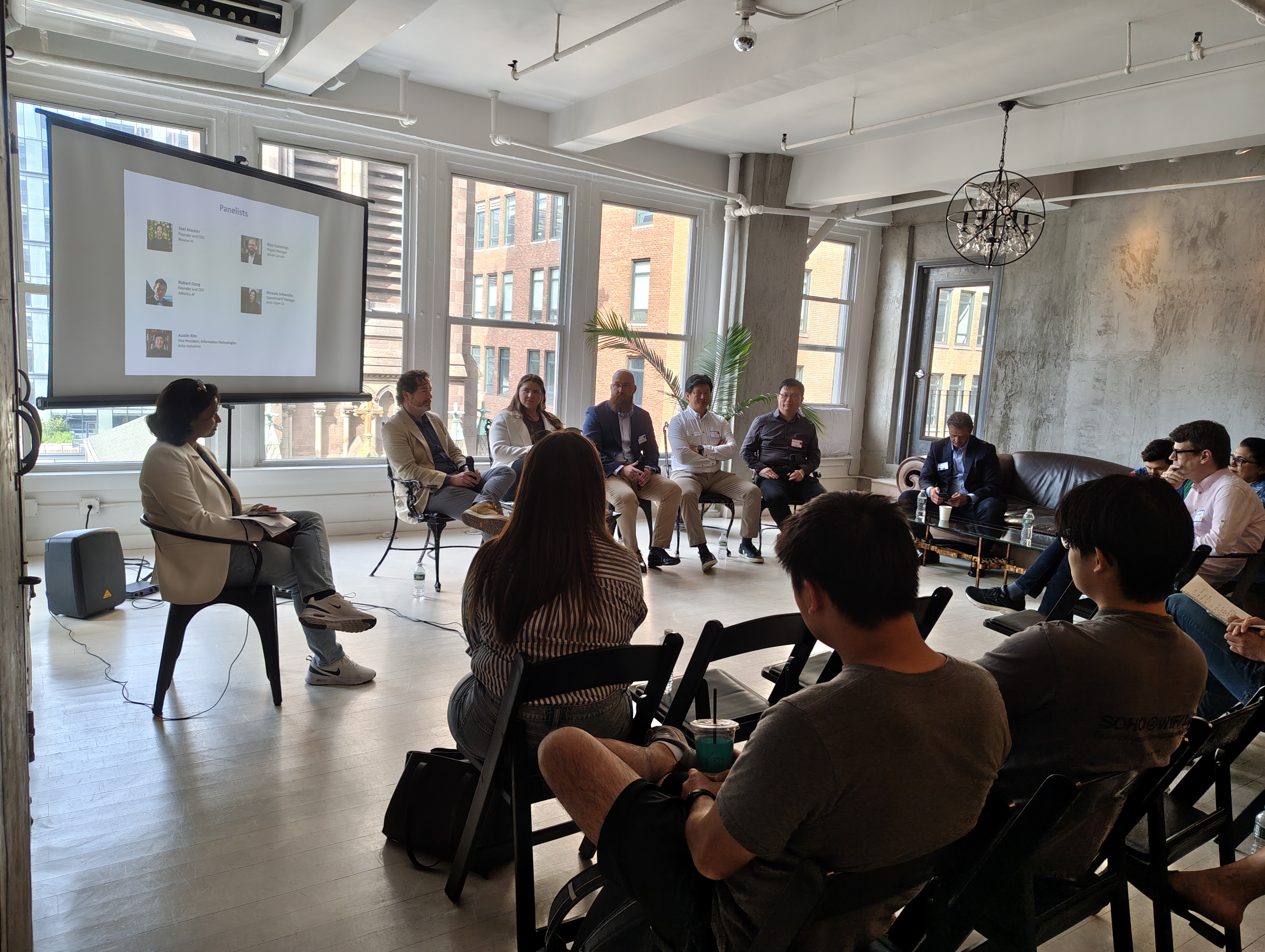
What the Room Talked About
Where time actually goes on a job site
Alex walked the room through what a long-day automotive retool actually looks like: constant change orders, tracking crew against shifting scope, reconciling what was planned versus what was built. The shocking part wasn't the complexity — it was how much of it still happened in spreadsheets, emails, and phone calls.
Miranda added the office perspective: a project manager's day at Andy J. Egan is often more about hunting for information — pulling from Procore, Vista, PDFs, emails — than making decisions. The data exists. It just doesn't talk to itself.
The bottleneck isn't people or process — it's that every system speaks a different language and nobody has built the translation layer. That's what we're building at Jobotics.
— Robert Dong, Founder & CEO, Jobotics AIWhy now — and not two years ago
Joel left Google Research and spent months in steel-toed boots shadowing PMs and foremen before writing a single line of code. His answer to "why now" was direct: the models finally exist that can reason over unstructured construction data — drawings, daily logs, RFIs, submittals — not just structured databases. That's new.
Robert added the data layer dimension: coming from Meta, TikTok, and Cruise — environments with world-class data infrastructure — walking into construction and seeing PMs manually reconciling six systems to answer one question was a signal, not a problem. It wasn't an AI problem first. It was a data problem. Fix the data layer and the AI gets dramatically more powerful.
AI agents are moving the needle — for real
Miranda called out 2026 as the year where agentic tools stopped being demos and started showing up in actual workflows. Job close-outs that took 4 hours now take 3 minutes. Contract review that took a week now takes 30 minutes. These aren't projections — they're numbers Andy J. Egan is running with.
From the panel — what's actually pulling its weight today:
→ AI-assisted contract review and risk flagging
→ Automated job close-out and documentation
→ Material matrix generation (1 week → 2–4 hours)
→ Cross-system data reconciliation without manual exports
Hot take: five years from now, one thing that's true on every job site
The panel's closing lightning round surfaced the conviction everyone in the room shares: the contractors who build their operational memory today will have a structural advantage that compounds. Every project teaches the system. Every decision gets captured. The gap between those who start now and those who wait will be much harder to close than it looks today.
Thank You
Huge thanks to Robert Metz and Anita Venkiteswaran for making this event happen, to E3 for backing both Jobotics and Bowser AI, and to every contractor and operator who showed up and spoke honestly about where things stand.
The best conversations of the night happened after the panel wrapped — GCs and subs comparing notes, investors asking operators what they actually need, founders listening. That's the kind of room we want to keep building.
More to come from Jobotics AI + Bowser AI.
Ready to Build Your Operational Brain?
If the conversations from NY Tech Week resonated — let's talk about what Jobotics can do for your operations.