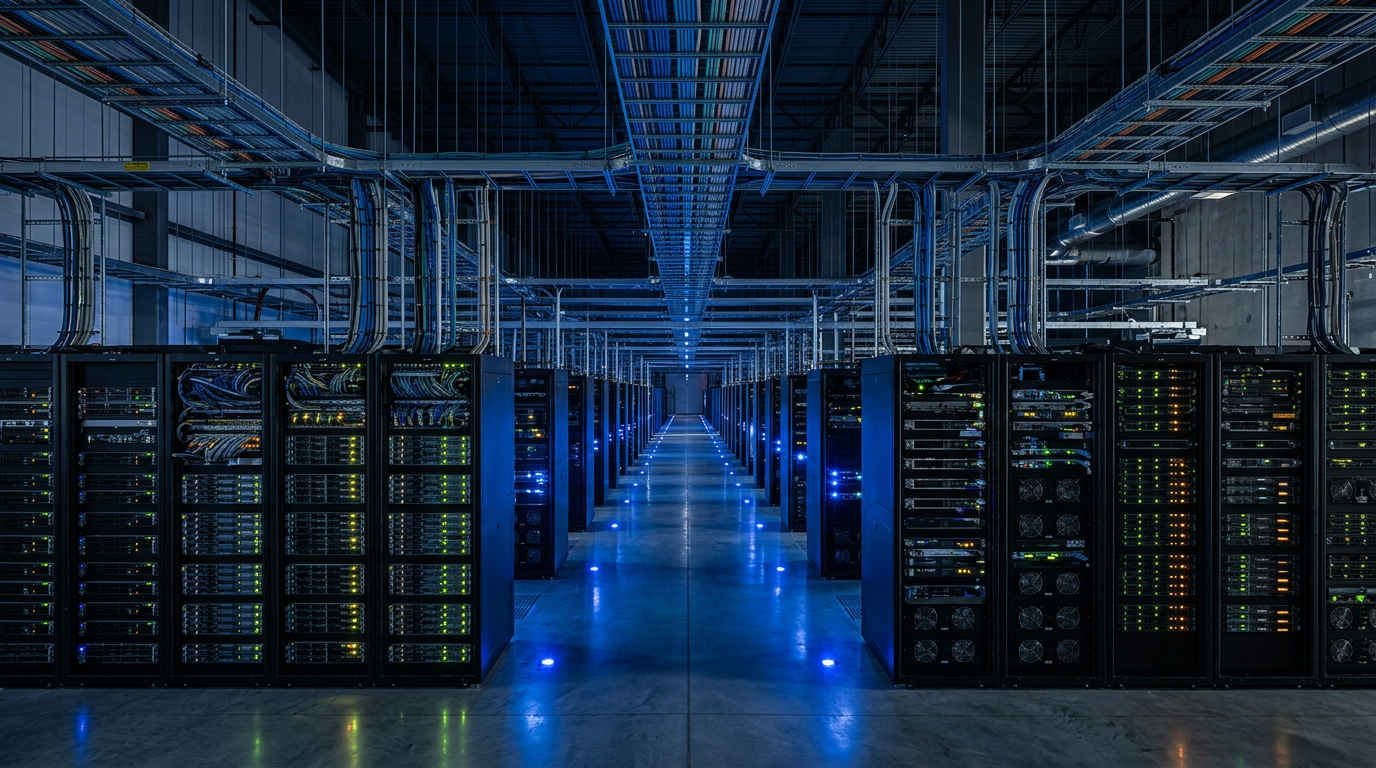
The Expansion of AI Infrastructure
Industry estimates from firms such as Turner & Townsend place the global data center construction market between $220 billion and $250 billion as of 2024, with forecasts exceeding $350 billion before decade's end.
The driver is technological rather than speculative. AI workloads require significantly higher power density than traditional enterprise computing. Some industry analyses estimate three-to-five-fold increases in power consumption per rack compared with earlier server generations.
That translates directly into larger:
- Electrical systems
- Backup power installations
- Mechanical cooling infrastructure
- Prefabricated piping assemblies
Unlike software scaling, these systems require physical installation. Specialty contractors — particularly in electrical and mechanical trades — are central participants.
But Is It Sustainable?
Construction economists caution that megaproject categories often experience volatility. Large hyperscale campuses create short-term spikes in spending that may not repeat annually.
Furthermore, procurement structures among hyperscale clients tend to be highly competitive. Industry benchmarks from Engineering News-Record show specialty contractor gross margins typically range between 15% and 22%, but participation in megaprojects can compress margins into the low teens.
High revenue does not necessarily translate into high profitability.
Labor Constraints Complicate Growth
The Bureau of Labor Statistics reports that the median age of construction workers continues to rise, while the Associated Builders and Contractors estimates the industry must add more than half a million workers in 2025 to meet baseline demand.
As a result, contractors are expanding fabrication and modularization capacity. Research from McKinsey & Company suggests offsite construction methods can reduce labor requirements by 20–30% and accelerate schedules in certain project categories.
The growth narrative is therefore intertwined with operational adaptation.
The Bottom Line
AI-driven infrastructure expansion is generating sustained physical construction demand. But:
- Project timing creates volatility
- Competitive procurement pressures margins
- Labor shortages force production model changes
The opportunity is structural. The profitability depends on execution.
← Part 1 — Is There Really a Manufacturing Construction Boom?
Read Part 3 — Are Specialty Contractors Becoming Industrial Platforms? →
Ready to Transform Your Construction Operations?
See how Jobotics AI can help your team manage risk, contracts, and project outcomes with real-time intelligence.